Can you cure PTSD?

This is a question I hear from patients on a near constant basis and one I ponder on a regular basis both personally and professionally. What does it mean to cure PTSD? Does it mean you can sleep again? Does it mean you don’t remember what happened to you? Does it mean you can smile again? The notion of a “cure” for any mental health condition is still an extremely controversial topic in the field. While there are some mental health conditions we know are not “curable” by the textbook definition of a cure such as Schizophrenia, Bipolar Disorder, or Autism, that does not mean your life is over. Think about it this way. Is there a cure for Diabetes? Is there a cure for cancer? Is there a cure for a broken leg? The standard answer is “ yes,” but when you think about these conditions, the “cure” is more about treatment not necessarily just getting rid of the disorder. With cancer, you can go into remission, but that doesn’t mean it’s cured because it can come back. With diabetes, you can manage it with insulin and still live a full life. PTSD is the same way. When I think about “curing” PTSD, I think about it just like “curing” cancer; an individual goes through treatment, their symptoms subside, and they are able to function again. Does that mean it will always be like that? No, of course not, there are no guarantees with any treatment medical or psychological. But you can have your life back in a way that you likely didn’t think possible.

Now, I recognize how Pollyanna that perspective may sound to many, but from experience with my patients and copious amounts of research done my individuals far smarter than I am, it is something I wholeheartedly believe to be true. I have seen people with PTSD symptoms for decades go through treatment and come out the other side happier, healthier, calmer, more rested, and able to live again. Their trauma wasn’t gone though, trauma never goes away, it’s the symptoms that we are trying to treat. PTSD is made up of 4 symptom clusters: re-experiencing, avoidance, negative mood and thought changes, and hyperarousal. I spent a whole lot of time getting to know these symptoms in textbook form before I got to see them in the real world and let me tell you, the textbook has nothing on the real world manifestation of this life-destroying disorder. PTSD eats away at someone, it infects their entire existence, it makes them want to die, but for most, they keep on fighting. Suicidal thoughts with PTSD are so very common as is drinking, other substance abuse, sexual difficulties, medical problems, and a whole host of other life changers, but just as Princess Leia says in Rogue One, “hope” is the answer. Hope means there is at least the smallest glimmer that things will change. Never underestimate the motivating power of hope even if it’s just to prove someone wrong. PTSD can be cured, symptoms can go down, your life can be yours again. No, your trauma will never go away, but that does not mean you cannot get better.

Treatment for PTSD sucks. I’ll be the first one in the office telling you that from meeting #1. Having to uncover your deepest, darkest, more horrid experience to a near complete stranger is an experience that inherently makes your body tense and pucker with anticipation, but that’s honestly my job. It is the job of a trauma psychologist to be your go to person, the person who sits with you while you tell every gory, bloody, scary, horrifying, disgusting detail of this horrible time in your life, and who will never recoil from a single word. Treatment means uncovering the wound, cleaning out the infection, and stitching you up. It also means going through the rehabilitation and tending to the scar. See, trauma is a scar while PTSD is the hemorrhaging bullet wound. Like any wound, you have to stop the bleeding before you put it in a cast. Your life will never be the same after a trauma, that’s the very nature of trauma, but it does not mean your life ends after the trauma. Hope exists, treatment exists, you can exist again. To learn more about PTSD, treatment, or recovery from trauma, feel free to email or call my office. There is life after trauma, there is you after trauma.
The Quarter-Life Crisis

Your 20s suck. The reason they suck is because it is a very vague time point in your life where you’re not really a child anymore, but you’re also still not really an adult either. We use the term “young adult” to define individuals typically between 18-25 years-old, but then anyone older than 25 is just an adult until they reach the age of “older adult,” which is usually 65+. But are 26 year olds really adults? By legal definitions, yes of course they are. When you are 18 years-old you typically graduate high school, make a big life decision (i.e., go to college, go to work, go into the military, etc.), and then are expected to act like an adult. One of my favorite phrases that truly highlights my concern with this issue is from a Tumblr account I wish I remembered so I could cite, but it goes a little something like this: you expect college freshman to make a decision about their whole career yet 3 months ago they had to raise their hand for permission to pee. It doesn’t make sense.

In your 20s and 30s, you are constantly bombarded with messages about who you are, what your life should look like, how successful you should be, what house you have, what relationship you are in, what school you should go to, and on and on and on. These pressures can come from any source whether it be family pressure, the media, friends, and internal ideas about what your life should look like. The quarter-life crisis is a term I use often with my patients who are frequently described as “millennials” to highlight how these pressures can severely impact their functioning and drastically alter the way they think, feel, and act. Common signs of a quarter-life crisis are feeling lost, lonely, confused, scared, and anxious about your life. These are above and beyond typical anxieties about life, but rather exemplify a pattern of chronic self-doubt, anxiety, avoidance, and low self-esteem. But does this description really seem limited to millennials? Not really. This pattern of experience has been found in all generations just at different severity levels and if you’ve ever seen any John Hughes movie than you’ve probably seen signs of this phenomenon. The quarter-life crisis is not limited to any particular generation, yet individuals who are actively going through it have received some pretty negative messages about their self-worth based on the label.

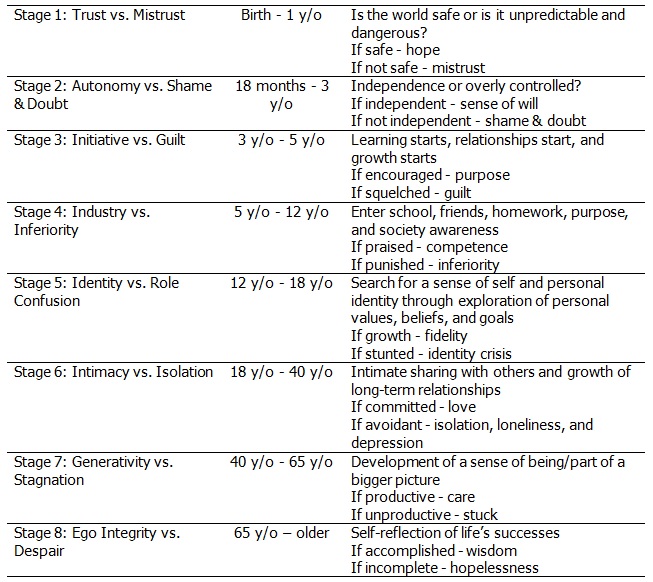
According to Erik Erikson, a well-known psychologist in the field of development, life is defined in accordance with particular stages. He defined life as comprising 8 stages from infancy to adulthood each with particular psychosocial crises that result in either a positive or negative outcome for personality development. Let’s go over his stages quickly:

Now, I will be the first to admit that I am not a developmental psychologist and that I have not done nearly as much research as Erikson on these stages, but I can’t help but think that Stages 5 & 6 might be more interconnected than they appear. This is what brings us to the topic of a quarter-life crisis. During this stage in your life, you’re defining not only who you are as a person now, but who you want to be as a person in the future. To say that you’ll know at 18 exactly who you want to be at 40 isn’t realistic largely in part because your brain has not developed the executive functioning skills to make those kind of decisions, hence, the quarter-life crisis.

When you’re in your early/mid-20s to early/mid-30s your brain has finally finished cooking from a biological standpoint. You are better equipped to think clearly, logically, and long-term, but what also comes is the fundamental human anxieties of life. Who are you? Who do you want to be? Why aren’t you there yet? The quarter-life crisis highlights a near universal experience of individuals in this developmental stage of life that may require more exploration than Erickson provided. In a way, the anxieties caused during this stage of your life are similar to those of Stage 8; questioning your life and defining accomplishment. Ask yourself some of these questions:

·         Who defines who you are as a person?

·         What do you want in your life? What don’t you want?

·         Do you feel worried about the future?

·         Do you think there’s something wrong with you because you’re not
           married, have babies, a mortgage, a career, that perfect car, or whatever
           other symbol of “adulthood” you think you should have?

·         Do you feel like a failure?

·         Are you scared of who you will become?

·         Do you feel alone?

These questions are important to start asking yourself because these are some of the real questions that will help you define yourself not just now, but in the future. Screw what the media, society, or even your friends tell you about your life. What do you want? Who do you want to be when you grow up? The comparison of your “behind the scenes” to someone’s “highlight reel” can really alter your perceptions of yourself.

I’m not writing this just from a professional lense, but a personal one. I look around at people in my cohort and I see what they have accomplished. I compare myself constantly to individuals who have been in my field longer and ask “why am I not there yet?” I have discussions about anxieties, worth, love, and purpose with my friends, colleagues, and clients on a near constant basis. I went through my own quarter-life crisis and kinda feel like it’s still there a bit, but it is these times that make us human. We question our own existence, we question our worth, we question what makes us happy, and we seek answers even after we have them. You are not weird because you don’t know what you want to be when you grow up. You are not abnormal because you still don’t know if you want children. You are not broken because you feel alone. You’re not behind the curve because you’re still in school. You are human and your humanity is what makes you amazing, anxieties and all!
 

I shall now leave you with one of my favorite pictures that, again from Tumblr, shows the struggle. If you'd like to discuss this matter further, feel free to email me at jnspsychology@gmail.com or via phone at (702) 587-1573.
 

So, you wanna learn about BDSM?

I must start this blog by giving a huge shout out to David Ortmann and Dr. Richard Sprott. Their book “Sexual Outsiders: Understanding BDSM Sexualities and Communities” is one of the best I have read and really conveys the importance of knowledge when working with people who want to engage in safe and effective BDSM relationships. You can check out their book on Amazon (https://www.amazon.com/Sexual-Outsiders-Understanding-Sexualities-Communities/dp/1442217367/ref=sr_1_1?ie=UTF8&qid=1493306645&sr=8-1&keywords=sexual+outsiders). Another little disclaimer: I am avidly against 50 Shades of Grey. It does not accurately represent a BDSM relationship or BDSM sexual practices given the lack of consent, harm-based manipulation, and inaccurate utilization of BDSM tools. While this blog is not about my disdain for 50 Shades, I’ll let a real Dominatrix explain that a bit more in one of my favorite Try Guys videos:

What is BDSM? BDSM is an acronym for different types of sexual and power dynamics in some relationships. It includes Bondage and Discipline (B/D), Dominance and submission (D/s), and Sadism and Masochism (S/M). Each of these specific areas have intricacies and complexities which are going beyond the simple intro of today, but as Ortmann and Sprott put it, BDSM “describes forms of sexuality that incorporate restraint, pressure, sensation, training, and elements of both erotic and nonerotic power exchange between the parties engaged.” Now, on to what BDSM is NOT! BDSM is not rape, it is not domestic c violence, it is not a mental illness, it is not harmful. There is a lot of stigma associated with the use of alternative practices in relationships particularly the use of pain, toys, power dynamics, and fantasies that go against the norm. A huge reason for this is a lack of correct information about the ins and outs of BDSM. Today is merely a toe in the waters of BDSM and designed for those who want to learn more about these practices, but it is not a how-to-guide for entering into the world of BDSM. Well then, let’s dive in!  

1.       Consent is key! In BDSM relationships, there is clear consent about what is going to happen as well as boundaries set in place if someone feels unwilling to proceed. This is where some people mix up BDSM and sexual assault. In sexual assault, there is not consent. In BDSM, there is ALWAYS consent. Even though both situations may look similar on the surface in regards to power dynamics or even physical pain, they differ in most regards, but especially in regards to consent.

2.       It’s ultimately about pleasure. In some BDSM dynamics, physical pain or discomfort is part of the excitement which leads to high levels of arousal. Pleasure and pain combinations are found in both BDSM and non-BDSM sexual relationships given the eroticism level of that combination. For example, biting someone’s lip during sex is not exclusively part of the BDSM world, but it does classify as a pain/pleasure dynamic. Spanking during a sexual encounter does not necessarily mean you’re engaging in BDSM dynamics, it just might mean that you feel increased arousal when your buttocks feel a temporary sting. BDSM practices can be incorporated into sexual relationships without making it a dominant aspect of your relationship. But it is also important to know that everyone loves differently, everyone screws differently, everyone feels differently; as long as there is consent and everyone is of consenting age, anything really goes.

3.       Start slow and with purpose. When learning about BDSM initially, it can feel quite overwhelming.  Not just when facing the stigma related to your sexual interests, but also when just delving into the ins and outs. Communication with partners is going to be key, which for many is a bit scary; it’s very vulnerable to share your fantasies with someone especially if you’re still figuring them out yourself. Start by first answering this question: what turns you on? For some, this question is difficult to answer, which is why I ask the second question of what does NOT turn you on? Exploring sexual relationships and eroticism is intimidating because we worry we’re “weird” or “strange” or a “freak.” Sex is a natural part of life, yet so many feel ashamed of it. Your body is amazing, it has the potential for so much pleasure and maybe for you, pain helps tap into that pleasure.

4.       Power plays in the bedroom are different than power plays in the boardroom. A criticism I have heard from some regarding BDSM and women is that it is “anti-feminist.” Here is a little secret, BDSM is entirely feminist! It sets the stage for consensual, pleasurable, communicative, and loving relationships, which is very in line with the idea of feminism; for those who don’t understand feminism, it means males and females are equal in all their rights. We talked about consent earlier and having a voice, which is exactly what makes BDSM relationships so exciting for many people; it allows for equal say in how you interact, what happens to you, and what it means to you. Power dynamics are complex, but a simple example I have comes from an old story I heard long ago about a CEO and a Dominatrix. People were so confused why such a strong man who dominated in the boardroom wanted to be dominated in the bedroom. The simple answer was he wanted a break from control. Power dynamics highlight our own complexities, we aren’t one note and our sexual needs go beyond who we are in different areas of our lives.

5.       Sex changes over time. As you learn more about your body, your interests and fantasies, and if partners change, sex is going to change as well. Humans are designed to evolve and sexual relationships do as well. If you were not into BDSM-type activities 5 years ago that doesn’t necessarily mean you cannot be into them now. Time changes every one of us, experiences change every one of us, it makes sense that those experiences would help shape who we are as sexual beings as well. This is where the education comes in. Read about sex, read about power dynamics, go visit your local Love Store or Lover’s Lane and start looking at different toys, games, and lubes, watch Dr. Ruth (she’s a hoot, it’s fantastic), listen to love and sex podcasts, visit FetLife. We live in the era of Google and there is so much out there in the world, the odds are that you are not alone in your kinks.

If you would like to learn more about BDSM, sex therapy, or just have general questions about sexual functioning, please do not hesitate to call me at 702-587-1573 or email at jnspsychology@gmail.com

Men, Sex, and Anxiety

One of my favorite topics to talk about is anxiety. Another is sex. As someone who has spent a large portion of her career examining gender variables, these topics tend to overlap when talking about men and sexual performance. Anxiety does not discriminate based on any variable and for many individuals, when anxiety hits sex starts to plummet. Sex is an innate part of humanity, without it, the species could not continue. But as we have progressed as a species, so have our difficulties. Men who have difficulty functioning sexually are stigmatized, humiliated, and frequently report feeling inadequate. But what role does anxiety have on sex for men? Let’s dive in shall we!

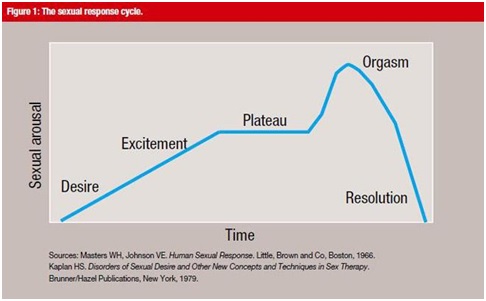
According to Masters and Johnson, sexual response occurs on a particular cycle:

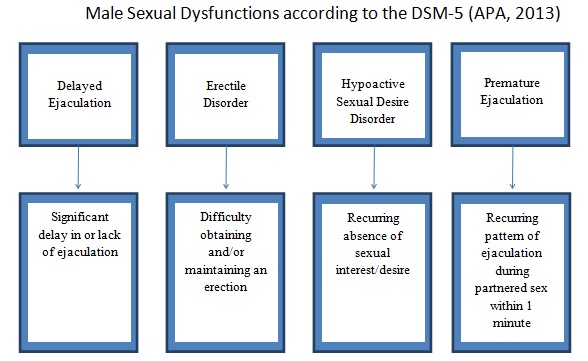
When we discuss sexual functioning issues in men, we are talking about something not working somewhere in this cycle. Now, different sexual problems happen at different points. For example, the most commonly known sexual difficulty in men is erectile disorder (aka erectile dysfunction). This is the inability to obtain and/or maintain an erection for the desired length of time. For most, they think that it is an organic issue that can be treated with a pill such as Viagra or Cialis. However, for more individuals than you may think, the cause of ED is not organic. Psychological effects can be a major cause of sexual issues, particularly in men. One of the major areas I am going to focus on here is anxiety.

Anxiety can look differently for different people, but ultimately it is a sense of arousal (not sexual) where your body cannot turn off it ingrained flight, fight, or freeze response. Your body is preparing you for something bad whether it be anxiety related to intrusive memories of combat, fear of going over bridges, shaking from a fear of panic, stress related to obsessive thoughts; anxiety makes your body turn on and not in the fun way. When your body is anxious, it is often difficult to focus and this includes sexual focusing. When a man is anxious he may notice his erection not emerging or deflating quicker than he’d like . He may be able to “keep it up,” but not be able to have an orgasm. For some, the anxiety makes their system go into overload and they may orgasm extremely quickly.

So why does anxiety cause these problems and why is it that once they start to happen more often, it’s harder to fix them? The penis is very sensitive, both literally and figuratively. Anxiety can make a man even more sensitive to everything around him both internally and externally. A major area of concern I see in practice is the impact of Posttraumatic Stress Disorder or PTSD on erections. While not often discussed, it has been found that individuals with PTSD are at significantly increased risk of having sexual problems. Why you may ask? One major area is the body. When someone is going through a trauma, their entire body system is activated. They are more sensitive to sights, sounds, smells, tastes, and physical sensations, so when they are trying to make sense of what is happening, their brain is creating a pairing that tells it “when X body system happens, Y bad thing will happen so be prepared.” Ready for this: when your body is sexually aroused, the exact same physiological system being activated is the one that was activated during trauma that created that pairing. So, when your body “turns on” for sex, it’s also “turning on” for trauma. No wonder someone with trauma has difficulty functioning sexually! Their body is preparing for another horrible thing to happen even though the actual situation is one of pleasure. The pairing effect often results in increased fear and anxiety, intrusive thoughts about the trauma, disconnection from the situation, and physical touching difficulties to name just a few. This is only one example of how anxiety can cause difficulties in someone’s sex life, but for men especially, there is another layer to the anxiety.

Societal pressures about sexual performance and expectations in men are staggering, but not often discussed. Men are typically told that being a man means certain things and one of those things is having a functional penis. There are horrible messages given to men that if they don’t have sex that makes them weird, a freak, broken, not a man, and so many other completely wrong labels. Not being able to have sex, masturbate, or feel aroused with anxiety is completely normal, but it is also one of the things that makes someone feel not just anxious, but depressed. If a major area of your identity is your ability to functioning sexually and that goes away, what does it say about you? For many men with anxiety and sexual problems, it does not just go away. If anything, the longer you wait to treat the anxiety, the harder (pardon the pun) treating the sexual problem is as well.

Anxiety is a tricky thing to treat by yourself as are sexual problems, but what we know about treatment is that treating one can impact the other. Finding a provider who can address these interconnected issues is key in your overall recovery. If you would like to know more about how to treat anxiety and sexual problems in men, feel free to give me a call at 702-587-1573 or an email at jnspsychology@gmail.com. Having anxiety does not make you a freak, having sexual problems does not make you any less of a man, and seeking out treatment does not mean you are weak. 

Things You Didn’t Learn in Sex Ed - Ladies

Okey dokey ladies, let’s get down to business (and yes, half of you are now singing the song from Mulan, you’re welcome btw). One of my major pet peeves is that the majority of individuals in the United States are not provided comprehensive sex education. What sex education should include is information not only about biology, reproduction, and STDs, but information about sexual pleasure, functioning, natural body quirks, social pressures, boundary setting, and so much more. Instead, you either get nothing or abstinence-only which is fraught with inaccuracies.

I have worked with a number of teens and young adult women who report feeling alone in regards to their bodies, who don’t feel like they are normal because they don’t know what is “normal” and what isn’t. Some of the information I provide here may not apply to your individual experience and that’s ok! Everybody is different and that’s the real message of sex education. Your body is unique, your quirks are unique, and you are fantastic no matter what society may tell you about your body, sexual orientation, gender orientation, or whatever label they try to stick onto you. Here are just some basic things I think you should know about your body that you probably didn’t learn in school. This will most likely not be the only time I address this topic, but this is a good start.

1.       You are hairy. Hair will be everywhere. It’s up to you to decide how you want to deal with it, but the reality is, it’s everywhere and it just keeps on growing. There will be times where you have to pluck hair from your chin, your breasts, your belly button, or pretty much anywhere. You do NOT have to groom just because someone wants you to UNLESS that person is you. Be prepared, hair is coming.

2.       Related to hair, should you decide that you want to give shaving a try, please, please, please be careful around your labia. Nothing is worse than shaving around your vagina and taking a slice out of your labia.

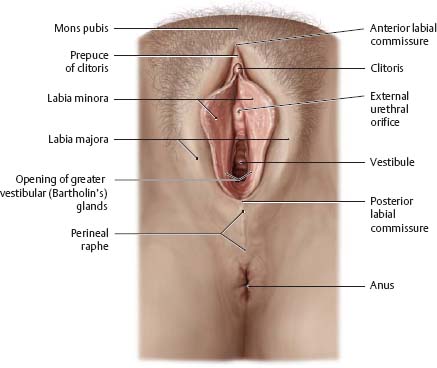
3.       Also, speaking of the labia (a diagram has been included below for those who may not know what a labia is) be very careful not to pinch it when putting in or taking out a tampon if you have long nails. One of the major nail trends happening right now is stiletto nails and there is nothing worse than pinching your labia with sharp pointy fingernails. 

4.       Another thing no one tells you about is that weird sensation in your vagina after you’ve been on a bike for a while. Just like any other area of your body that has blood flowing through it, your vagina can fall asleep, and if you’ve ever had that tingling sensation in your foot when it starts to wake up, just imagine how odd that feels in your vagina. Again, completely normal.

5.       Your bladder is small. That’s it. Whenever you get slack from a guy for having to pee all the time, just remind whoever made the smartass comment that your organ is smaller than theirs, just like their brain compared to yours.

6.       Sometimes things can get stuck up there. Yes, this is a thing that happens and no, I’m not talking about a magic trick of losing things in your vagina. I’m talking about situations where your pelvic muscles may have tightened and something that was inserted may have gotten stuck momentarily. Examples of this include diaphragms, tampons, nuva rings, diva cups, small vibrators, and condoms. You can use your pelvic muscles to try to push the items out, but sometimes you’re gonna have to go fishing to get the item out. Just be careful of nails!

7.       Your vagina talks. Again, not a magic trick, although you probably could make it a magic trick. Your vagina is a hollow entry and sometimes air goes into it. During times of vaginal penetration where air is being forced in and out of the vagina it’s going to make sounds.  IT’S NORMAL!!!

8.       For those women who are engaging in vaginal sex with men where there is ejaculation into your vagina, something no one has probably told you is that you will leak. Yes, there will be leakage after the big O inside of you for a little while after even if you use your kegel muscles to push the fluid out. Word of advice, do not wear super adorable undies the day immediately after ejaculation, they will be leaked on.

9.       Do not get seminal fluid in your eye. I had someone describe it to me as one of the worst burning sensations they experienced, which ultimately lead to an eye infection. A major trend in pornography now is a “facial,” which has transcended to real life sex practices. Unfortunately, this significantly increases your chances of a bullseye (literally), which is no bueno.

10.   Your body is truly amazing! You don’t learn in sex education that your body is truly sensational. It can have multiple orgasms, hike mountains, traverse oceans, create human beings; it can do anything. There is no right or wrong way to have a female body, there is only your way.

If you would like more information about anything I discussed in this post, feel free to reach out to me via email at jnspsychology@gmail.com. I hope you took something from this even if it was just a giggle or two.