OCD

Presenting With Learn Sex Therapy

When sexuality and OCD intersect, the clinical picture can become complex quickly.

That’s why I’m pleased to offer a two-part training where I’ll walk clinicians through how obsessive-compulsive disorder and sexual functioning can overlap in ways that are often misunderstood.

Across two sessions, I’ll explore the different ways OCD can influence sexual thoughts, behaviors, and functioning, and I’ll share practical strategies to help clinicians approach these concerns with greater clarity, confidence, and clinical sensitivity.


Day 1 – April 10
Sex & OCD: Exploring the Relationship Between Sexual Functioning, Sexual Themes, and OCD in Adults


Topics include:

• Introduction to ERP theory and treatment
• Intersectionality between sexual themes in OCD and sexual functioning
• Body-focused obsessions and sexual health and responses


Day 2 – April 24
Sexual OCD: Diagnostic Features and Treatment Implications for Adults with S-OCD


Topics include:

• Safety assessment with harm-based themes
• Perinatal and postpartum OCD
• Clinical examples and development of sexually-based exposure hierarchies


These are nuanced clinical issues that many providers encounter but rarely receive training on.


https://www.learnsextherapy.com/course/sex-and-ocd for registration
Exposure Therapy 101

Anxiety is defined as “a state of intense apprehension, uncertainty, and fear resulting from the anticipation of a threatening event or situation, often to a degree that normal physical and psychological functioning is disrupted” (American Heritage Medical, 2007, p. 38). While I’m a big fan of this technical definition, I think it’s safe to say to anyone who has ever experienced anxiety is that it just SUCKS! The way your body reacts to anxiety makes you legitimately feel like you’re dying. I remember my first panic attack so clearly that if I needed to create it for any reason that would definitely not be a problem (it involved a snake and, at that time, my anxiety towards those little beasts was near paralyzing). I didn’t know what I know now about treatment for anxiety, particularly about exposure-based treatments to resolve any anxiety or trauma disorder. Each year, Anxiety Disorders impact approximately 18% of 40 million adults in the United States (NIMH, 2013).

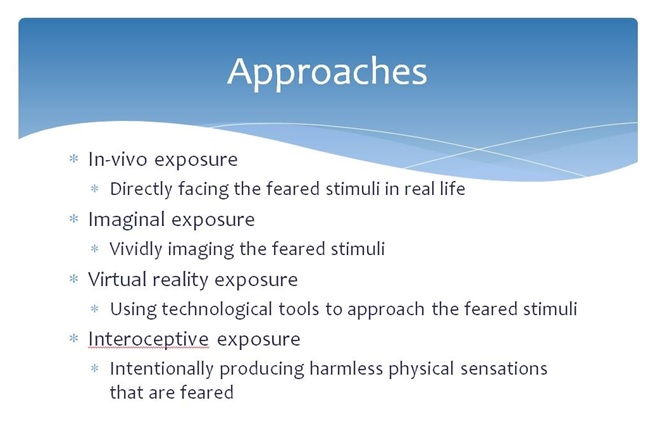
So, what is exposure therapy? Considered the gold standard treatment for anxiety disorders, exposure-based treatments focus on change by exposing an individual to their feared objects, activities, or situations in a safe environment to help reduce fear and decrease avoidance (APA Division 12, 2013). Below are so basic examples of what type of techniques are used in exposure-based treatment.

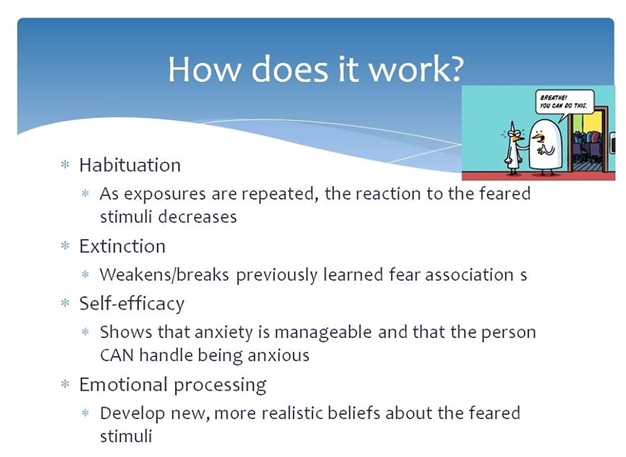
While exposure therapy seems scary at first glance, what we know about it is truly astonishing. Numerous research studies have revealed that positive treatment outcomes for Anxiety Disorders are maintained longer for individuals who have participated in Cognitive-Behavior Therapy and Behavior Therapy (exposure therapy; National Institute of Mental Health, 2013). But the real question people typically have is not “what is it?” but rather “how does it work?” Well, here’s how:

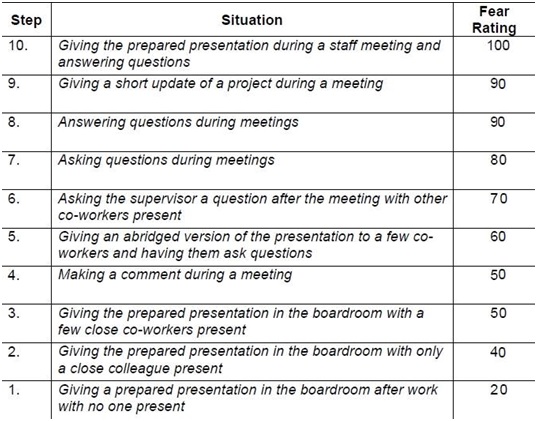
Over time, anxiety goes down the more frequently someone practices/engages in the activity that makes them anxious. Here are some examples of how you and your therapist can take this theory and put it into action:

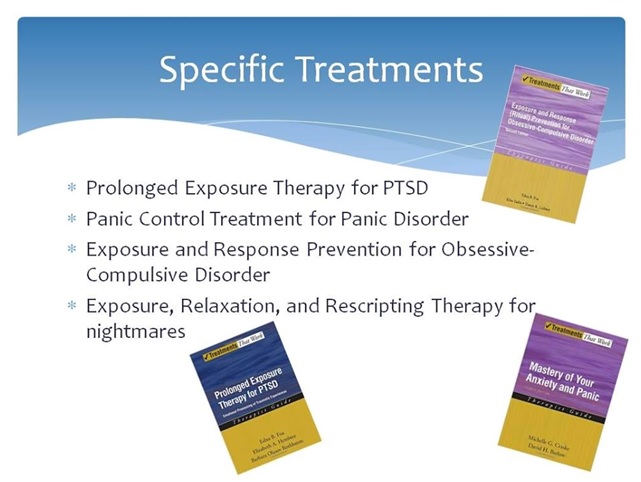
While exposure therapy isn’t magic, sometimes it can feel like that. It can treat a variety of Anxiety and Trauma Disorders such as Social Anxiety, Panic Disorder, Obsessive-Compulsive Disorder, Specific Phobias, and Posttraumatic Stress Disorder (PTSD). I have seen individuals who have chronic anxiety (we’re talking 40+ years) go through exposure therapy and report no longer having anxiety, at all! I admit my bias when it comes to exposure therapy, but it truly is one of my favorite things to do in treatment because IT WORKS. Some examples of specific exposure treatments include:

If you experience anxiety, things can get better. It won’t always be pleasant and, at times, it downright hurts, but you can overcome your anxiety, you can take back your power, you can live a life without anxiety! To learn more about anxiety, trauma disorders, and treatment feel free to email me at jnspsychology@gmail.com or give me a call at 702-587-1573 to schedule an appointment.