April 6th is Asexual Awareness Day 💜
A moment to recognize, respect, and celebrate the asexual community—people who experience little or no sexual attraction AND have rich, meaningful lives, relationships, and identities.
Asexuality is not a disorder, not something to pathologize, and not something that needs to be changed. It’s a natural variation of human experience.
If you’re asexual: you are valid, seen, and deserving of understanding today and every day.
April Is Sexual Assault Awareness Month: Let’s Talk About It
April is Sexual Assault Awareness Month, and honestly…this is one of those topics that people know about, but don’t always talk about. Sexual assault is often pushed into the background because it’s uncomfortable, heavy, and hard to face. But for many individuals, it’s not something in the background it’s something that shows up in their daily lives, their relationships, their thoughts, and even their bodies.
Sexual trauma doesn’t always look the way people expect it to. It’s not always obvious, and it’s definitely not something that people just “get over.” The impact can show up as anxiety, depression, difficulty trusting others, feeling disconnected from your own body, or constantly being on edge. Sometimes people don’t even realize that what they’re experiencing is connected to past trauma—they just know something doesn’t feel right.
Survivors are speaking up more, but there’s still a lot of fear, fear of not being believed, fear of being judged, or even fear of facing what happened. Because of that, many people carry their experiences quietly for years.
And here’s the thing—your brain and body are doing exactly what they were designed to do: protect you. That hyper-awareness, the overthinking, the emotional shutdown, the difficulty relaxing…those aren’t signs that something is “wrong” with you. They’re signs that your system adapted to something overwhelming. The problem is those survival responses don’t always turn off when the danger is gone.
Sexual Assault Awareness Month is about bringing these experiences into the light. It’s about understanding that healing doesn’t look one specific way. For some people, it means talking about it. For others, it means slowly rebuilding a sense of safety. For many, it means learning how to feel in control of their life again.
As a psychologist, one of the most important things I can offer is a space where people don’t have to filter themselves. A space where they’re believed, where nothing they say is “too much,” and where healing can happen at their pace—not anyone else’s.
It’s also worth saying—this work can be heavy, not just for survivors, but for those supporting them. If you’re a clinician, a partner, a friend, or a family member, taking care of yourself matters too. You can’t pour from an empty cup, and showing up consistently requires care on your end as well.
Sexual trauma is more common than people think, but it’s also one of the most misunderstood experiences. And while it can deeply impact someone’s life, it does not define them. Healing is possible. It might take time, it might feel messy, and it might not be linear—but it is possible.
If this month does anything, let it be this: start the conversation, reduce the stigma, and remind people they don’t have to carry this alone.
Resources for Support
National Sexual Assault Hotline (U.S.): 800-656-HOPE (available 24/7)
Online chat support through national sexual assault services
RAINN (Rape, Abuse & Incest National Network)
National Sexual Violence Resource Center (NSVRC)
1 in 6 (support for male survivors)
Local crisis centers and mental health providers
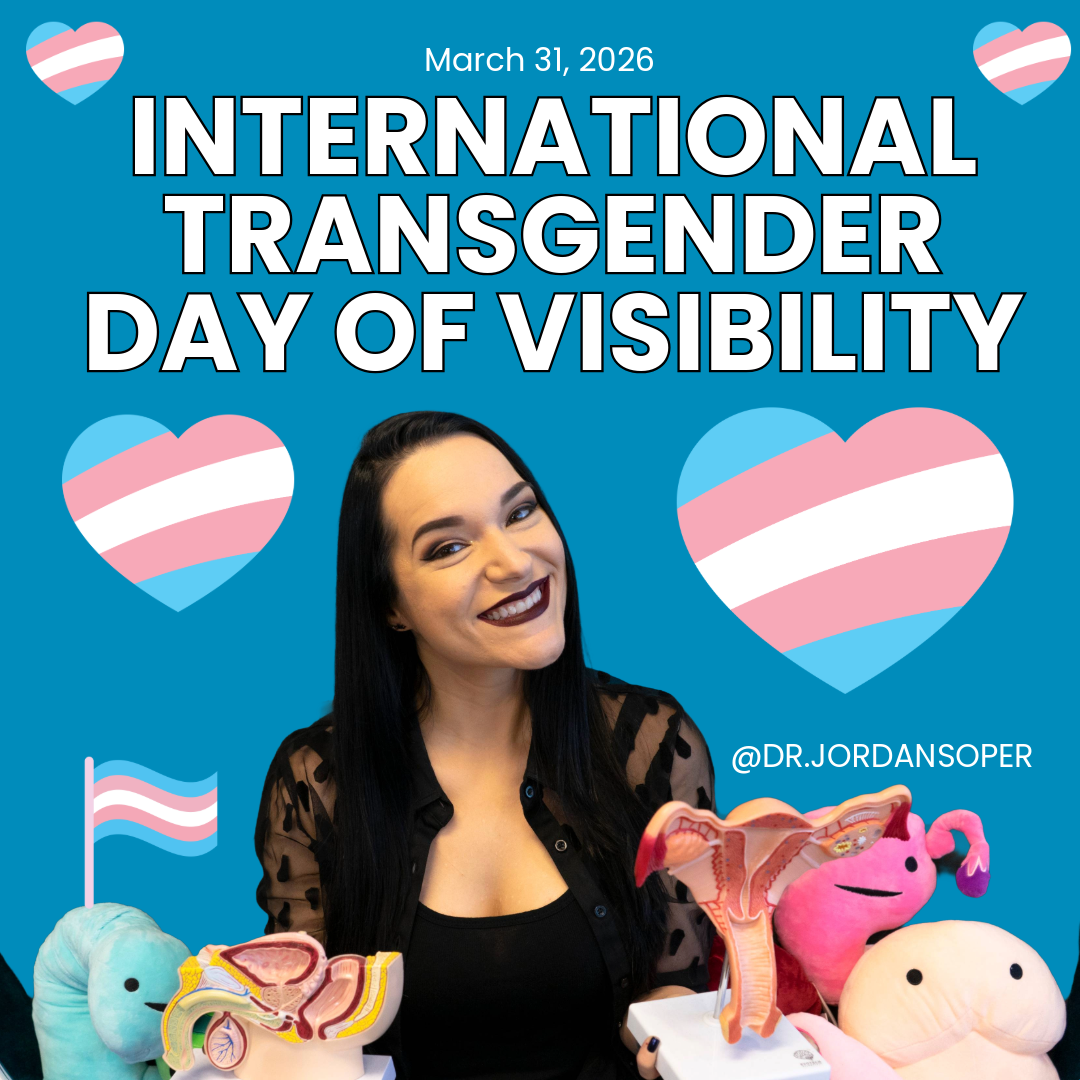
Transgender Day of Visibility
I am honored every day to support and work alongside transgender and gender-diverse individuals in their mental health journeys. Your resilience, authenticity, and courage continue to inspire me. 🏳️⚧️
Trans people deserve more than visibility. 🏳️⚧️ They deserve life. On this Transgender Day of Visibility, we are reminded that visibility was never meant to be the finish line in the work toward trans liberation. Every day, trans people are told to be seen, but are not always protected. They are celebrated, but often lack meaningful support. They are highlighted in conversations, yet still navigating systems that can make survival harder than it should be.
@trevorproject - The truth is: everyone deserves to live fully, safely, and without fear of violence, shame, erasure, or abandonment.
I will continue to support this community and be an ally for them.
🏳️⚧️ Transgender Resources
Crisis & Immediate Support
Trans Lifeline: 877-565-8860
https://translifeline.org
The Trevor Project: 1-866-488-7386 | Text START to 678678
https://lnkd.in/gP_aviwx
988 Suicide & Crisis Lifeline: Call or text 988
https://988lifeline.org
LGBT National Help Center: 1-888-843-4564
https://lnkd.in/gY6Wkm8V
Crisis Text Line: Text HOME to 741741
https://lnkd.in/gJBKhEdv
Mental Health & Community
PFLAG (support groups for individuals & families)
https://pflag.org
Q Chat Space (online LGBTQ+ teen support)
https://www.qchatspace.org
TransFamilies (support for families of trans youth)
https://transfamilies.org
Legal & Advocacy
National Center for Transgender Equality
https://transequality.org
Transgender Legal Defense and Education Fund
https://lnkd.in/grVDJqQn
Financial & Transition Support
Point of Pride (grants for transition-related care)
https://lnkd.in/gMTvZriJ
Trans Lifeline Microgrants
https://lnkd.in/g5JY24BS
Directories & Finding Care
OutCare Health OutList (affirming providers)
https://lnkd.in/gwGXiJJd
Out.us (state-by-state LGBTQ+ resources)
https://www.out.us
#TransDayOfVisibility #TDOV #TransLivesMatter #GenderAffirmingCare #MentalHealthMatters #LGBTQIA #TransRightsAreHumanRights #AffirmingCare #InclusiveMentalHealth #PsychologyMatters #Psychologist #therapist
Presenting With Learn Sex Therapy
When sexuality and OCD intersect, the clinical picture can become complex quickly.
That’s why I’m pleased to offer a two-part training where I’ll walk clinicians through how obsessive-compulsive disorder and sexual functioning can overlap in ways that are often misunderstood.
Across two sessions, I’ll explore the different ways OCD can influence sexual thoughts, behaviors, and functioning, and I’ll share practical strategies to help clinicians approach these concerns with greater clarity, confidence, and clinical sensitivity.
Day 1 – April 10
Sex & OCD: Exploring the Relationship Between Sexual Functioning, Sexual Themes, and OCD in Adults
Topics include:
• Introduction to ERP theory and treatment
• Intersectionality between sexual themes in OCD and sexual functioning
• Body-focused obsessions and sexual health and responses
Day 2 – April 24
Sexual OCD: Diagnostic Features and Treatment Implications for Adults with S-OCD
Topics include:
• Safety assessment with harm-based themes
• Perinatal and postpartum OCD
• Clinical examples and development of sexually-based exposure hierarchies
These are nuanced clinical issues that many providers encounter but rarely receive training on.
https://www.learnsextherapy.com/course/sex-and-ocd for registration
Updates galore!
I recognize it’s been quite some time since I have updated the Blog portion of my website. When I pause and reflect on why that it is, I am taken aback by the many changes that have transpired since the last post in November 2017. To summarize the past 3 years fully would take far more time and energy than I think most people have to read right now, so I will try to provide highlights rather than a full summary. Let’s begin shall we!
· Continued working on my AASECT Sex Therapist Certification since August 2017 with the amazing help of Drs. Stephanie Buehler and Shirley Baron
· Obtained the certification in December 2020 with extreme delight (I am the only Licensed Psychologist in Nevada with this certification)
· Private practice adventures continued in both individual practice and within a group practice
· I had the privilege to train two students in anxiety and trauma treatments that will make amazing providers for the community
· Began the process of board certification which will continue over the coming 1.5 years
· COVID-19 happened and there are both too few and too many words to describe that experience
· Worries about patients, their families, my own family and friends, colleagues, the world…is everyone an option for that worry?
· Started some new hobbies in an effort to create a better work/life balance
· Reflection has happened more and more with uncertainty about exact goals, but as the year 2020 has taught, have ideas not exact plans
While I recognize there is still so much more to address, I wanted to take the brief opportunity to reflect on an area that keeps popping into my head. When I think about the role of psychologists in the world and especially my role in my chosen specialty, I can’t help but focus on the overarching desire to inform the world of the science. Why do we have the concerns we have? Why is sex so difficult for so many people? Why is anxiety such a pain in so many aspects of our lives? Without having an exact goal in mind, I have a good idea of what I want to do in both my practice and within this Blog space. Let’s just focus on really cool information! Let’s learn together and survive the coming uncertainties and discovers! Stay safe everyone and Happy New Year!
-Dr. Jordan Soper